
FPL's $7 Billion Rate Hike; What Florida Bills Could Look Like Over the Next Decade

Updated: Sep 1
A $7 billion utility rate hike is not just a headline. For Florida households, it can show up month after month in a bill that already competes with groceries, insurance, rent, and car payments.
Florida Power & Light customers are now facing a larger question than “What will my next bill be?” The better question is: What happens if electric costs keep rising for the next 10 years?
The answer depends on state regulators, fuel prices, storm costs, grid upgrades, home energy use, and whether residents adopt alternatives like solar, battery storage, efficiency upgrades, or utility swap lease options. But the direction is clear. Electricity is becoming a bigger long-term household expense, and Florida residents need to plan for it with the same seriousness they bring to home insurance or mortgage rates.

What a $7 billion rate hike could mean for Florida bills
FPL’s proposed or approved rate increases are typically reviewed through Florida’s utility regulatory process, where the company makes the case for higher revenue and consumer advocates challenge whether the requested amount is fair. A $7 billion increase spread across millions of customers and multiple years does not hit every bill the same way.
Bills vary based on:
Home size
Air conditioning use
Seasonal weather
Rate class
Fuel charges
Storm recovery charges
Local taxes and fees
Whether the home has solar, storage, or efficiency upgrades
Still, the basic impact is easy to understand. When a utility receives permission to collect billions more from customers, much of that cost eventually flows into monthly bills.
A household that already pays $180 to $250 per month during hot months could see a meaningful increase over time, especially if base rates rise while fuel, storm, and grid costs also remain high. Even smaller monthly increases become large when they repeat for years.
Monthly increase | Added cost per year | Added cost over 10 years |
$15 | $180 | $1,800 |
$30 | $360 | $3,600 |
$50 | $600 | $6,000 |
$75 | $900 | $9,000 |
These figures are not a forecast of any one household’s bill. They show the math behind the concern. Utility rate hikes behave like a long subscription increase. The charge may look manageable in one month, but the decade-long cost can be significant.
For retirees on fixed incomes, renters who cannot easily install upgrades, and families already dealing with rising insurance premiums, even a modest increase can tighten the budget. Florida’s heat also makes electricity less optional than in cooler states. Air conditioning is not a luxury during much of the year. It is a health and safety need.
Why FPL says costs are rising
Large utility rate requests usually come from several cost pressures at once. FPL and other electric utilities commonly point to infrastructure needs, population growth, reliability demands, and storm hardening.
Florida has a fast-growing population, and new homes, apartments, businesses, schools, and data centers require more grid capacity. The utility must maintain power plants, transmission lines, substations, transformers, and distribution lines. Those assets are expensive to build and repair.
Storm preparation is another major factor. Florida utilities spend heavily on:
Strengthening poles and wires
Undergrounding select power lines
Trimming trees near distribution circuits
Replacing aging equipment
Improving substations against flooding and wind
Restoring service after hurricanes
Fuel is also a major bill driver. Florida relies heavily on natural gas for electricity generation. When natural gas prices rise, customers often see fuel-related charges rise too. Fuel charges can move separately from base rate increases, which means customers may feel pressure from more than one part of the bill.
Then there is the cost of capital. Utilities finance large projects over many years. Higher interest rates can make construction and grid investment more expensive. When regulators allow utilities to recover those costs, customers pay through rates.
Consumer advocates often respond that utilities should not be allowed to overbuild, overearn, or shift every cost onto residents without strong scrutiny. Their concern is not that the grid should be neglected. Their concern is whether every dollar requested is necessary, reasonable, and timed fairly.
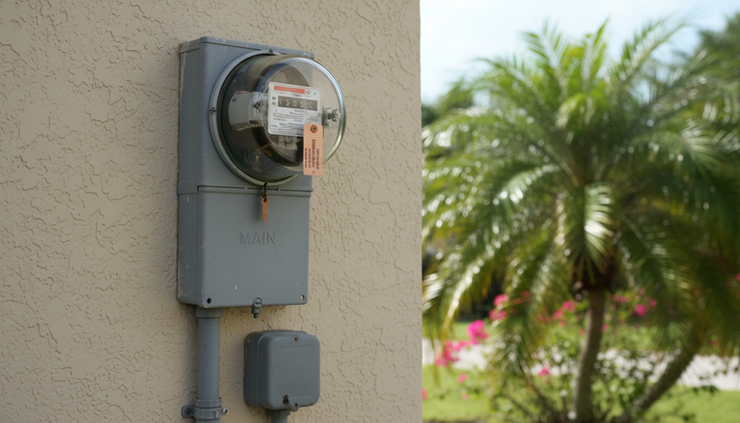
Experts expect the financial pressure to build over the decade
Energy analysts often describe utility bills as a compounding affordability problem. A household may be able to absorb one rate increase. The issue grows when several forces stack together.
Over the next decade, Florida customers could face pressure from:
Higher base rates
Ongoing storm recovery costs
More grid investment
Fuel price swings
More frequent extreme heat days
Higher household electricity demand
Insurance and housing costs that leave less room for utilities
Consumer advocates generally warn that utility affordability will become a larger public policy issue in high-growth states. Energy economists also tend to focus on peak demand. Florida’s grid must be built to handle high usage during hot periods, even if demand is lower at other times. That peak capacity costs money.
The burden will not fall evenly. A newer, well-insulated home with efficient air conditioning may handle rising rates better than an older home with poor ductwork, single-pane windows, and an aging HVAC system. A homeowner with rooftop solar and a battery may have more control than a renter in a high-use apartment.
This is why analysts often separate the impact into two categories.
Short-term impact | Long-term impact |
Higher monthly bills after rate changes take effect | More household income committed to electricity every year |
More stress during summer billing cycles | Bigger savings gap between efficient and inefficient homes |
Harder choices for fixed-income households | More interest in solar, storage, and energy management |
Greater attention to regulatory hearings | More pressure for policy changes and alternative programs |
The next decade may also make electricity more central to daily life. Electric vehicles, heat pump water heaters, induction cooking, home offices, medical devices, and smart appliances can all increase the need for reliable, affordable power. If rates rise while homes use more electricity, the monthly bill becomes a bigger financial planning issue.
This content is informational only and should not be treated as financial advice. Household savings depend on location, usage, credit terms, equipment, incentives, and utility rules.
Florida and California face different versions of the same problem
Florida and California are often compared because both states have large populations, high air conditioning demand in many regions, and growing interest in solar and battery storage. They also both face severe weather risks, though the risks look different.
Florida’s main reliability threat is hurricanes, tropical storms, flooding, lightning, and heat-driven demand. California faces wildfires, heat waves, drought-related stress, and public safety power shutoffs in some areas.
The rate story also differs.
California customers have seen some of the highest electric rates in the country, driven by wildfire mitigation, grid investments, clean energy mandates, transmission costs, and other factors. Many California homeowners adopted solar early, but changes to net metering rules have shifted the economics. Batteries now play a much larger role because storing solar energy for evening use can be more valuable than exporting it to the grid.
Florida has historically had lower average electric rates than California, but total bills can still be high because cooling demand is intense and year-round. The concern in Florida is that a large utility rate increase, added to storm costs and fuel volatility, could narrow the affordability gap over time.
Issue | Florida | California |
Major weather risk | Hurricanes, flooding, lightning, extreme heat | Wildfires, heat waves, drought, outage prevention |
Solar economics | Often tied to bill offset and long cooling season | Increasingly tied to batteries and time-of-use savings |
Grid challenge | Storm hardening and population growth | Wildfire mitigation and peak demand management |
Customer concern | Rising bills plus storm outages | High rates plus outage risk in some regions |
For companies and programs that service both states, California offers a warning and a useful lesson. Once rates rise sharply, customers start looking for more control. Solar alone can help, but solar paired with batteries often provides a stronger long-term strategy because it addresses both cost and resilience.

Utility swap lease options can turn a rising bill into a planning tool
A utility swap lease option is usually built around a simple idea: instead of sending more money to the utility every month with no ownership or long-term control, a household redirects part of that energy budget toward a solar or solar-plus-battery system.
The exact terms vary by provider, but the concept often includes:
Little or no upfront equipment purchase
A fixed or predictable monthly lease payment
Solar production that offsets part of the utility bill
Optional battery storage for backup power
Monitoring and maintenance support, depending on the agreement
The appeal is strongest when utility prices are rising. If a household can replace a portion of an unpredictable utility bill with a more predictable solar lease payment, it may reduce exposure to future rate increases.
That does not mean every lease is automatically a good deal. Residents should read the contract carefully and compare:
Escalator clauses
System size
Expected production
Battery capacity
Maintenance terms
Roof requirements
Transfer rules if the home is sold
What happens during outages
Total cost over the full term
The best programs are transparent. They show the expected utility bill after solar, the monthly lease payment, and the assumptions behind the estimate. They also avoid promising savings that depend on unrealistic usage patterns.
For some households, buying a system may produce better long-term savings. For others, a lease may be more practical because it avoids a large upfront cost. The key is to compare the lifetime cost against what the utility bill may become if rates keep climbing.
Batteries matter because hurricanes change the energy equation
In Florida, energy savings are only part of the story. A battery system can turn solar from a bill-reduction tool into a resilience tool.
During a hurricane or unplanned outage, a standard grid-tied solar system usually shuts down unless it has equipment designed to operate safely when the grid is down. A battery can keep selected circuits running, depending on system design and capacity.
That can mean power for:
Refrigerators and freezers
Phones and communication devices
Medical equipment
Fans
Lights
Internet equipment
Garage doors
Small appliances
A battery will not automatically run an entire home for days. Air conditioning, electric water heating, pool pumps, ovens, and vehicle charging can drain storage quickly. Good system design matters. Many homeowners choose a critical-load setup that powers essential circuits rather than the whole house.
California’s experience is useful here too. In areas affected by wildfire-related outages, batteries became a major part of the solar conversation. Florida may follow a similar path for different reasons. The trigger is not wildfire shutoffs. It is hurricanes, grid damage, and unpredictable restoration timelines.
As severe weather keeps testing the grid, battery storage may become less of a premium add-on and more of a standard part of home energy planning.

Proposed solutions and alternatives deserve more attention
No single fix will erase a $7 billion rate increase. A better path likely requires several solutions at once.
Regulators can require utilities to prove that major spending is prudent, phased properly, and fair to customers. Rate design can also protect lower-use households from carrying too much of the burden. Public input matters because utility cases shape bills for years.
Utilities can reduce long-term pressure by investing in cost-effective efficiency, grid technology, and demand programs that lower peak usage. If fewer expensive power plants and upgrades are needed to meet peak demand, customers benefit over time.
Residents can focus on the parts they can control:
Seal ducts and improve attic insulation
Replace old HVAC systems with efficient units when practical
Use smart thermostats without sacrificing safety
Shift major appliance use away from peak periods when rates reward it
Compare solar, battery, lease, and purchase options
Review bills regularly for usage changes, not just price changes
Policymakers can also expand access for renters, condo owners, and lower-income households. Community solar, shared storage, targeted efficiency upgrades, and fair financing rules can help more residents participate. Without those options, the benefits of solar and batteries may flow mostly to households with good roofs, strong credit, and available cash.
The next decade will reward households that plan early
FPL’s $7 billion rate hike signals a larger shift in Florida’s energy future. The grid is getting more expensive to build, protect, and operate. Hurricanes are raising the value of backup power. Growth is increasing demand. Fuel and infrastructure costs remain difficult to predict.
Florida is not California, but California shows what can happen when high rates, reliability concerns, and solar policy changes collide. Customers start looking for control, not just lower bills.
For Florida residents, the smartest move is to treat electricity as a long-term household cost, not a monthly surprise. Review usage. Watch the rate case. Compare options before the next summer bill spike. If solar makes sense, look closely at whether storage should be part of the plan. If buying a system is not realistic, utility swap lease options may offer a practical path to steadier costs.
The next decade of electric bills is not fully written yet. But waiting for rates to rise before making a plan is likely to be the most expensive option.
CLICK HERE TO SCHEDULE YOUR FREE CONSULTATION AND ENERGY ANALYSIS


Comments